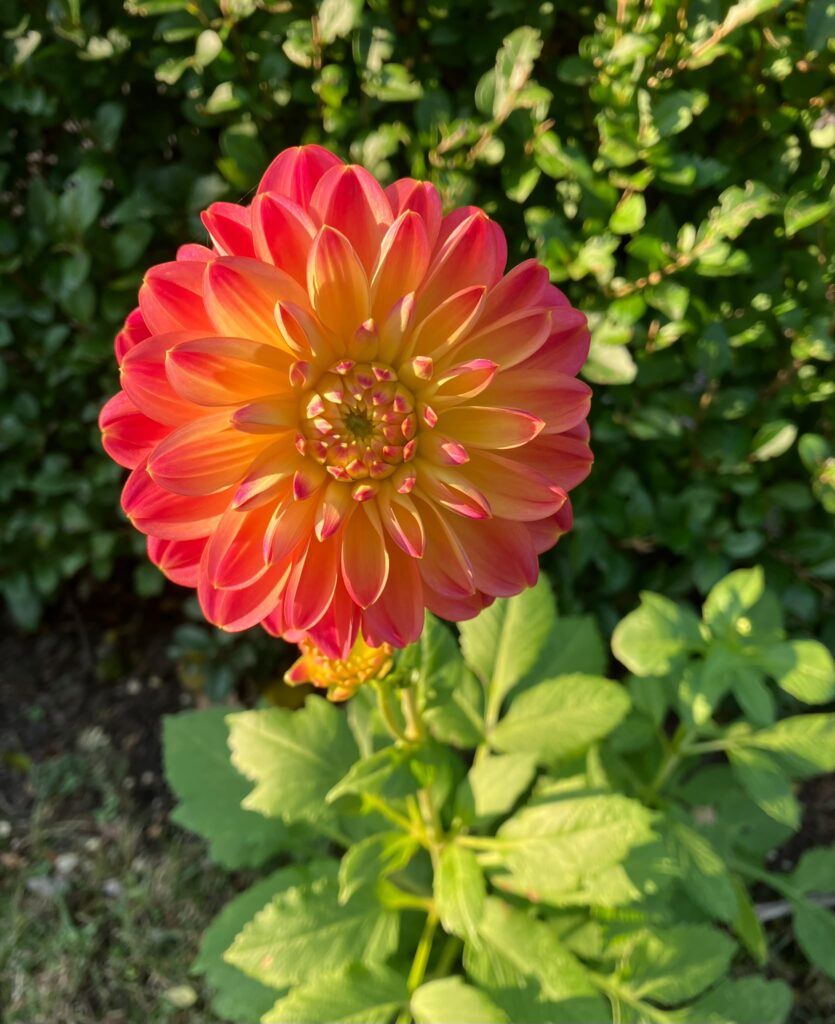
The dahlia: the “Prince of Carnival” among ornamental plants
Dahlias—kitschy to some, an exuberantly colorful, flower-filled exotic plant to others—were cultivated in Central America as food. They weren’t particularly tasty, and the plant turned out to be far more interesting than the tuber. Thus, the dahlia became an ornamental plant and was introduced to Europe in the nineteenth century. Today’s dahlias are hybrids. There are a great many varieties—roughly 20,000—ranging from single flowers to orchid-like blooms. The multicolored flowers bloom from July through November, until the first frost abruptly brings the blooming season to an end.
Dahlias are sensitive to frost and must be dug up in late fall to prevent them from dying prematurely due to freezing. Store the tubers in a cool (5 °C), frost-free, dry place. Not all dahlias are equally sensitive to frost.
Tip: Don’t dig up the tubers right away in the fall—the dahlia is still drawing nutrients from its leaves. Once the leaves start to wilt, you can dig up the tubers.
The tubers that hibernated can be replanted around mid-May, once the risk of night frost has passed. Plant them with the dried-out main stem facing upward. Plant them only ten centimeters deep. Dahlias prefer nutrient-rich, not overly wet soil and a somewhat sheltered spot. Propagate dahlias by dividing the tubers and planting the sections. Dahlias thrive in the sun and need to be watered regularly.
With their garish, plastic-looking, ball-shaped blooms and coarse, bold foliage, dahlias are like brash, cheeky monkeys. Banished to the slums of the allotment gardens, they stand defiantly, adding splashes of color amidst the fruits and vegetables—the silent majority. In the perpetually chaotic-looking cottage garden, these vibrantly colored dahlias blend seamlessly into a rich tapestry of diverse shapes and hues. They bring life to dull privet hedges, brighten up a September border that has otherwise finished blooming, and hold a permanent place in the cutting garden.
Dahlia flowers are the home base for earwigs—clever little creatures that know a thing or two about aphids. And as for the flowers: go ahead and cut them; they look great in a vase.
The dahlia is named after the Swedish botanist Andreas Dahl, a student of Linnaeus.
And the taste? A cross between radish and celeriac with a hint of pepper.