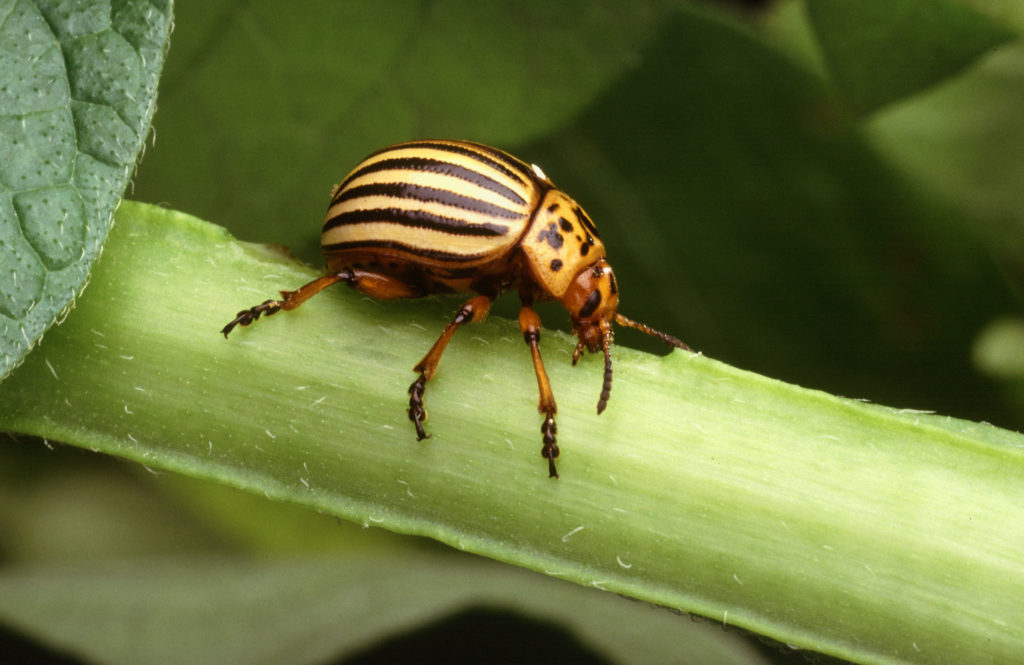
Climate change is making life easier for the Colorado beetle. Milder winters and warmer summers provide greater survival chances and additional generations.
The implications:
- Improved winter survival:
- Colorado potato beetles hibernate in the soil as adults.
- Severe frosts normally kill much of the population.
- Softer winters = more surviving beetles in spring
- Larger starting population = faster pest build-up
- In extremely cold winters, >50% could die in the past. That natural “reset moment” is becoming rarer.
- More generations per year
Development from egg → larva → beetle is temperature dependent
Resulting in hot summers:
- faster development
- shorter generation cycle
- sometimes an extra generation
In the United Kingdom, historically, one generation was usually normal. With prolonged warmth, this can go toward 1.5-2 generations. That sounds modest – but populations grow exponentially.
Longer active period
A longer growing season means:
- earlier from hibernation
- longer active in late summer
- more time to find food and lay eggs
-
- Result: higher pressure on late potato varieties.
- A faster resistance buildup
- Heat + more generations = faster evolution.
This increases the risk of:
- insecticide resistance
- more difficult to control populations with the complication that the Colorado potato beetle is known worldwide as a resistance champion
Implications for potato cultivation:
- More leaf loss
- Larvae devour potato plant leaves at lightning speed
In case of heavy infestation can:
- photosynthesis falter
- tuberization halt
- decrease yield by 30-70%
Growers should:
- start checking earlier, young plants are extra vulnerable, so more and earlier checking is needed.
- scout more often
- keeping an eye on several generations
Plague becomes less predictable:
- crop protection must be applied more frequently
- More generations means additional spraying and higher costs
- IPM strategies are becoming increasingly important
- biological control becomes more important, but also more complex
- In the United Kingdom, the Colorado potato beetle was for a long time a local and isolated problem, but that is going to change; local infestations will occur more frequently
Climate change can lead to:
- more structural establishment of the Colorado potato beetle
- stable populations
- annual returns in the same regions. Especially sandy soils and warmer microclimates are at risk
What do we expect in the next 5-10 years?
Probably:
- more regular outbreaks
- stronger summer populations
- northward expansion of populations
- less natural winter mortality
- greater economic impact