Earthworms

Ditchers par excellence

Smooth, long and thin is the earthworm and it prefers to live in the first eight inches of soil under our lawn. There the earthworm is spared by the digging gardener and is protected by the same gardener against its greatest enemy, the mole. The most common type of earthworm in our garden is the Lumbricus terrestris. An adult specimen measures thirty centimeters and has more than one hundred and fifty rings. The color of a healthy worm is pink to reddish brown. The front is round and that’s where the mouth is; the back is flat. A third of the length from the head is a band that is important for the reproduction of the worm.

Earthworms can live up to ten years and you wouldn’t expect that. A lost head or tail piece can regrow. The earthworm absorbs oxygen directly through the skin; he has no lungs. A worm has no eyes either, but the worm’s body is sensitive to light. Light means danger to the worm: the hot sun dries it out and, moreover, when it is so horribly visible, it is an easy prey for many enemies.

Earthworms reproduce by laying eggs. It takes five months for a young worm to hatch from the egg and then the worm needs another year and a half to mature.

Every garden has earthworms; per hundred square meters of garden there are about three thousand rooting in it. They eat their way through the earth, which is mixed with the remains of half-decayed plants and animals. In this way, this army of earthworms creates numerous tunnels that ensure a healthy water and air balance in the top root layer of the soil. The soil consumed by the worm, in which all the organic material has been digested by the intestinal action of the worm, is deposited on the surface in the form of mounds of earth – worm casts. Other types of earthworms fill the higher tunnels with the processed soil. This produces excellent soil, rich in plant nutrients and minerals from the deeper layers.

The worm army is able to completely replace the top two inches of garden soil with ‘worm’-processed soil within a few years. Stones that were once on the surface have therefore sunk five centimeters below the surface.
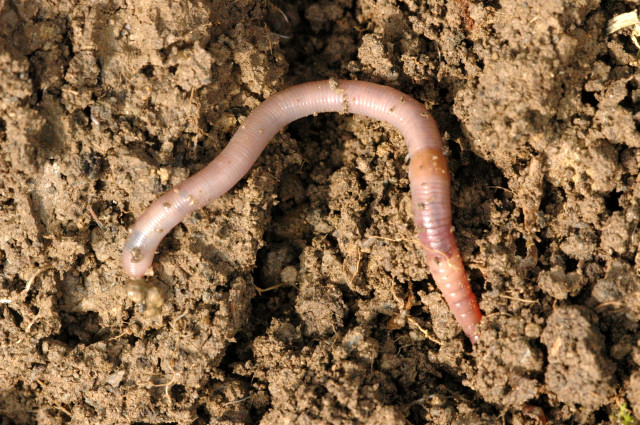
Earthworm, foto: James Lindsey - CC BY-SA 3.0

The Gardener and the Earthworm
Frequent digging between the plants and ruthlessly keeping the garden surface ‘clean’ do not provide ideal living conditions for the earthworm. Digging destroys the worm-friendly structure of the soil and makes it look for a less turbulent environment. Bare earth of the kind on which no fallen leaves lie and no weeds thrive, offers the earthworm no protection against the ever worm-hungry birds, hedgehogs, shrews and moles. The latter in particular is a major consumer: an adult mole can consume up to fifty earthworms per day. Moles even build special storage rooms in which they store earthworms.
The presence of a compost bin is a big step towards a healthy worm population. The worms multiply quickly in such a hotbed full of organic waste, so that they can also carry out their good works elsewhere in the garden.

See also: Earthworm
Spring

It will start!

The days are getting longer, the average temperature is creeping up, daffodils and crocuses are already blooming. Compost is sprinkled and raked in the vegetable garden. Under glass or in a greenhouse can already be sown.
When the average temperature rises above 7°C, the grass starts to grow and weeds also appear. Insects come out of hibernation, bees go in search of nectar and some insects go in search of fresh young leaves. Fungi and other pathogens become active as the temperature rises.
Cabbage whiteflies have overwintered on evergreens and multiply rapidly in the spring to colonize cabbage plants and strawberries in the vegetable garden.
Seed plant disease, a fungus, affects young beet plants in the spring.
Fortunately, it is not all doom and gloom in the vegetable garden. Sufficient nutrients and water ensure healthy crops that can take a beating. Crop rotation keeps soil parasites in check. Clean tools prevent the transmission of pathogens.
If there is something wrong in the vegetable garden, this website offers a solution. This relational database provides an overview of diseases and pests per crop. For each pest it is stated what can be done about it and how to prevent it.

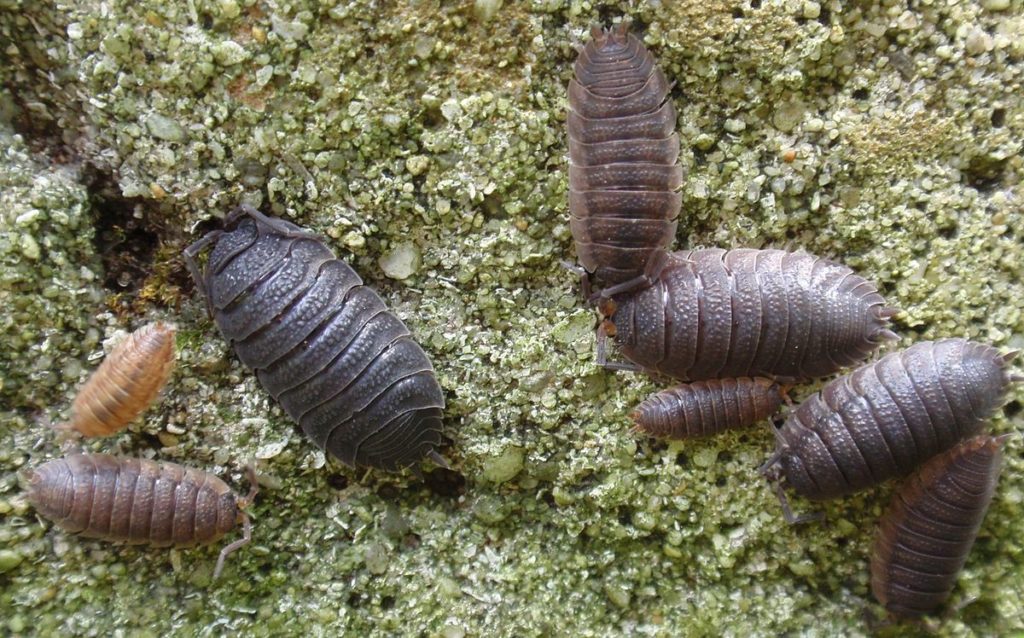
Woodlice, photo: Acélan - CC BY-SA 3.0

Woodlice live on organic material and thus contribute to the formation of humus in the soil. Woodlice works well underground, but unfortunately above ground that is not the case. In early spring, when the first seedlings emerge, woodlice eat young seedlings. Flowers and early fruit such as strawberries can also be affected.
Insects, spiders, frogs and birds are the natural enemies of the woodlice.

Frost

Not all plants are hardy

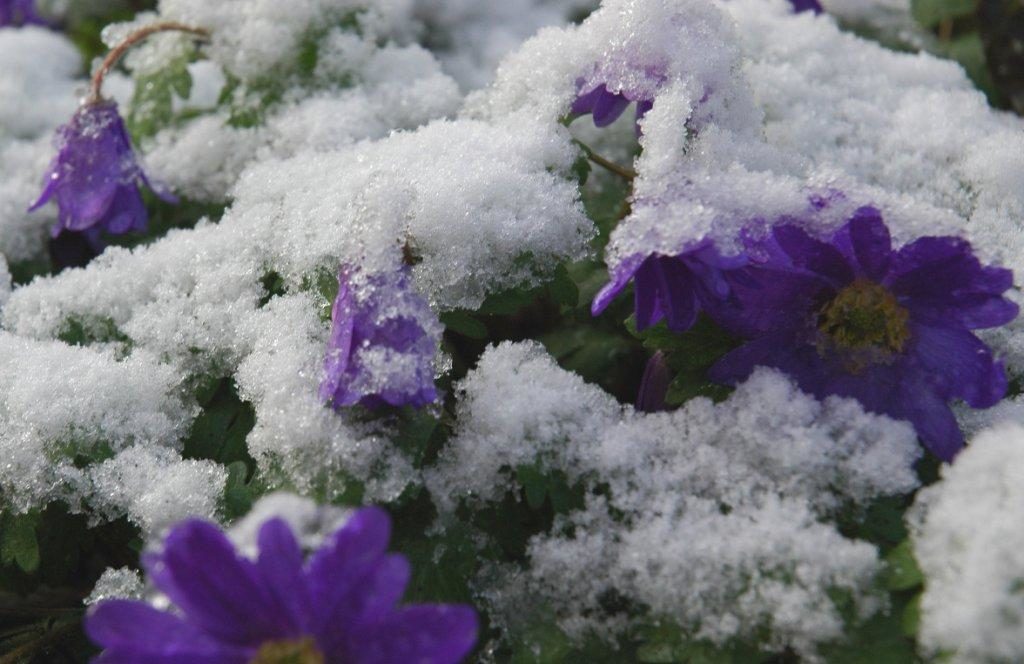
When it has frozen a few degrees and the garden is covered with frost in the morning, that means a white shroud for some plants. They did not survive the frost.

Temperatures below zero can trigger fatal processes in the green parts of a plant, such as the leaves becoming limp. This happens because the water in the inter-cell spaces freezes and thus more and more water is withdrawn from the cells, causing them to dry out. If the frost lasts for a long time, the leaves will dry out to such an extent that recovery is impossible. Even if the temperature rises very quickly after a period of frost, irreparable damage can occur. The ice in the leaf then thaws so quickly that the drought-shrunk cell wall cannot keep up with the rate of expansion and bursts. Even a quick attack of frost can be fatal for the leaves. The water in the cells is then not gradually withdrawn from the leaf, but freezes in the cell itself. The sharp points of the ice crystals tear the cell wall apart. In short, doom and gloom.

However, there are plants that can tolerate cold very well: these species tolerate freezing cold because a large amount of sugars – antifreeze – has been dissolved in the cell fluid. These plants are hardy, because the frost leaves them untouched. Kale, for example, belongs to this group of plants and can therefore remain on the land for a large part of the winter. A few degrees of frost even improves the taste, according to an old saying: frost causes the kale to produce extra sugar and thus the bitter taste disappears.

In addition to the sensitivity of the plant, the risk of frost damage also depends on the location. Some places in the garden are colder than others, the so-called frost holes: drafty places, where the cold frosty air sinks down between houses or along dikes and lingers. Do not put frost-sensitive plants there.

To comfort you: if the frost has struck the garden mercilessly, it is good to know that nature often gives the affected plants a second chance. They will no longer flower in the coming season, but new leaves will usually form later on.

Hardy liverwort (Hepatica nobilis), photo: PlantEnPlagen

If you want to garden without frost damage, you can choose from, for example, the following hardy, hardy perennials: yarrow (Achillea), monkshood (Aconitum), sea green (Ajuga), ox tongue (Anchusa), goat’s beard (Aruncus), columbine (Aquilegia) and daisies (Chrysanthemum). And forsythia, ribes, elder (Sambucus) and guelder-rose (Viburnum Opulus) are among the hardy shrubs.

Colorado potato beetle

Vegetable gardener watch your potatoes

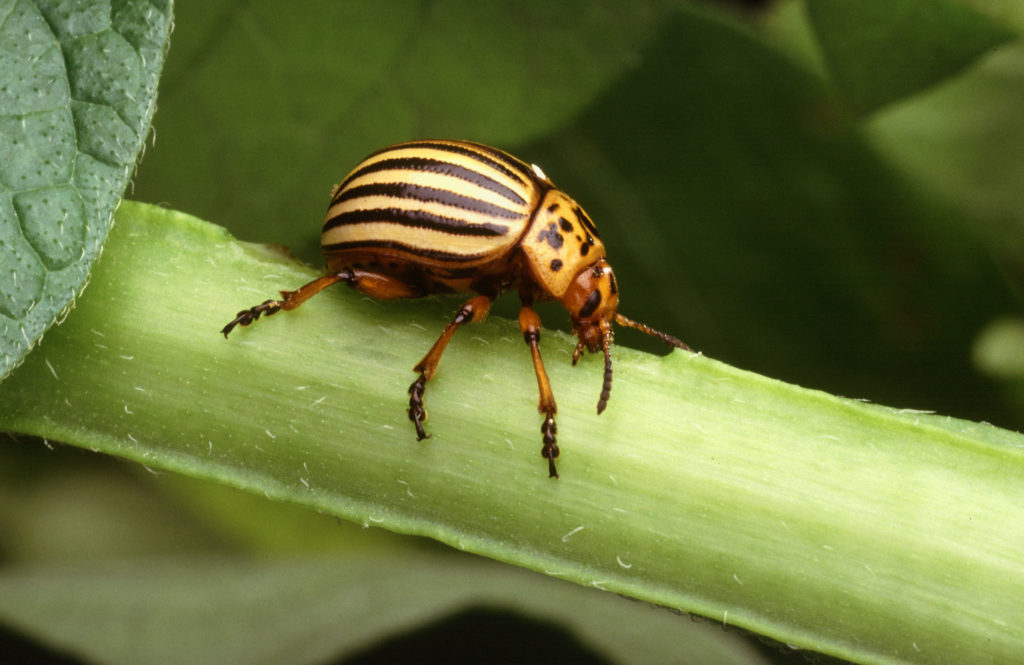
Colorado potato beetles and the larvae eat the leaves of potato plants. And they do that quickly. Catch the beetles and destroy them. The beetle is + 10 mm in size and is very harmful. Check the potato plantings regularly for the eggs on the underside of the leaf, destroy them. If you see beetles in the potato plants, hold a bucket under the plants and shake the plants: the beetles are startled and drop into the bucket.

recognize Colorado potato beetle
Colorado potato beetle, photo: US - Agricultural Research Service

The Colorado potato beetle has natural enemies only in its native range; there are no predators in the newly colonized areas that can withstand the poison of the beetle and its larvae. Natural enemies include birds, spiders, phalangids and over thirty different insects. Examples of insects that attack the beetle or its larvae are  ground beetles, the coccinellid beetles, shield bugs, lacewings, damsel bugs and wasps.