B C E F I M S T W

The grass in winter

Driving rain, hail showers and strong wind ravage the lawn

At night and early morning a chilly frost descends on the grace down. Moles leave a wild trail of mounds in their fierce hunt for worms. The GThe variety takes a beating in the winter, drenched in rain and sluggish because the growth is gone.

Careful when walking
The lawn, which is so strong in the summer, is vulnerable in the winter months. It is especially important if it has frozen on the ground at night and the blades of grass are still beautifully white.race to run. The otherwise flexible blades break like glass splinters under the heavy sole of the foot and then die brown. It won’t be until springonly then will they recover.

prevent moss
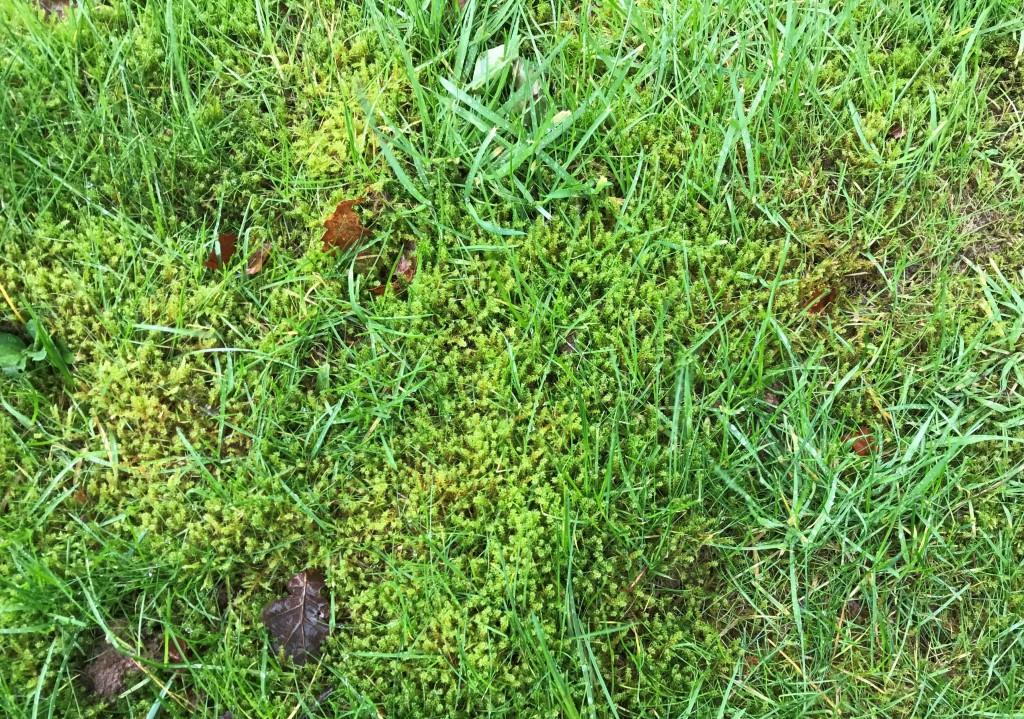
it gosun acidifies over time, partly due to our slightly acidified rain. If the growth of the gWhen the variety comes to a standstill during the winter months, the moss, which thrives in a slightly acidic environment, takes the opportunity to spread.
Rake the moss away. Sprinkle at the beginning of March, when it is possiblevariety gently begins to grow again, lime on the grace. This increases the acidity and makes it gasun moss-unfriendly. Fertilizing the gvariety is best at the beginning of April, when growth is completely back in the grace. That is also the time to remove any bald spots in the room to sow in the sun.

Moss growth in the lawn, is unfortunately not the only thing that stands a flawless lawn in the way. Moles , mildew , mushrooms , leatherettes can cause a lot of damage. More about diseases and pests in lawn can be found here .

Tomatoes

Tomatoes don't like rain

A shelter helps against the rain, because tomatoes, just like potatoes, are very sensitive to the pseudo fungus Phytophtorah .
As soon as brown spots appear on leaves and stems, the tomato hasdisease (Phytophthora) has emerged. This water fungus causes the characteristic black spots on the leaves of potatoes and tomatoes. They are fungal-like microorganisms.Late blight hibernates on remaining plant remains and in the soil. Contamination is caused by insects, spores carried by wind and rain and in splashing water. During periods of summer, hot and humid weather, Phytophthora can do great damage in a short period of time.
To prevent disease, tomatoes are aerated. In professional fruit cultivation, it is monitored how long the leaves remain wet (wet leaf period) and what the temperature is. The combination of both is partly responsible for the development of Phytophthora. Well-drained soil helps prevent Phytophthora: Moisture encourages germination of spores.

recognize late blight in patatoes
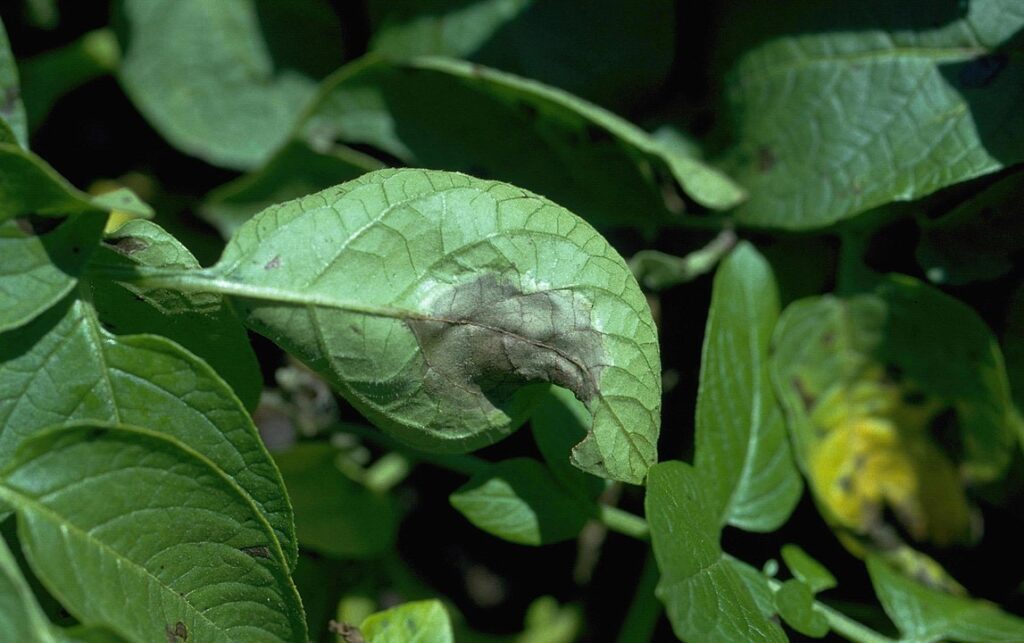
A potato leaflet showing late blight infection caused by Phytophthora infestans, photo: Howard F. Schwartz - CC BY 3.0

Phytophthora is not limited to potatoes and tomatoes only. Roses, for example, can suffer from root rot caused by phytophthora is caused. Silver firs, such as the Nordmann fir, can also be affected by phytophthora get root rot, causing the spruce to dry out and die.

Watering..

With a watering can or irrigate...

During dry periods you have to water your garden. This can be done per plant with a watering can or by irrigating all plants at the same time through the garden.
With a watering can it is best to water the soil around the plants in one go. In fact so much that the watering also reaches the deeper plant roots. On light soils, the water will be absorbed quickly by the soil; this does not apply to heavy clay. The ground quickly closes and puddles form: the soil is impermeable.

To see to what extent the water has sunk into the soil when irrigated with a sprinkler, it is best to put a spa in the ground in a few places in the garden to see where the soil is moist. Use a rain gauge to measure how much has been irrigated and note the ratio between the number of mm irrigated and the number of mm of soil that has become moist. Also useful to know in case of rainfall.

Also when irrigating, it is better to irrigate extensively in one go instead of a little every day. Irrigating a modest amount every day closes the soil (clay!) and produces a higher evaporation compared to a weekly large amount. In addition, the deeper roots are not reached and a more superficial rooting is promoted, so that plants dry out sooner. Loosen the soil after watering; that prevents silting. In addition, loosened soil dries out less quickly.

During drought it is best not to irrigate the entire garden, but to give a large amount of water per plant, once a week. Germinating weeds between the plants do not get a chance to grow. Newly planted shrubs and summer crops naturally need less, but more often, water to prevent them from drying out.

Watering in the evening gives the plants the opportunity to absorb water during the night. However, the moist environment also makes snails active. Watering in the morning prevents this, but shortens the time that the plants can store a surplus of water. In the morning, the plants dry better after watering, which in turn limits the chance of fungi.
recognize ferruginous water
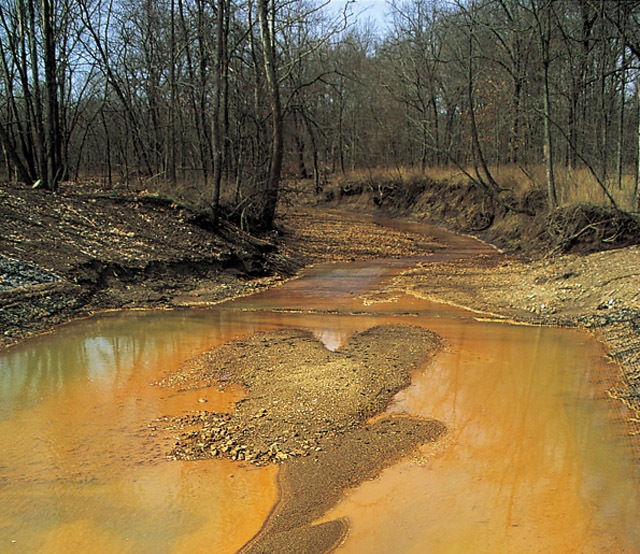
Stream with ferruginous water, photo: D. Hardesty - CC Public Domain

Groundwater from the coastal region can have a high salinity. Most plants in the vegetable garden are not salt tolerant.
Groundwater should not be used if it is highly ferrous. Ferrous groundwater oxidizes with oxygen from the air to iron oxide (Fe 3 O 4 ) – rust. Rust is not water soluble and is not absorbed by plants. Rust causes brownish discoloration of crops, pavement, furniture and building walls. Because plants do not absorb rust, it is not a problem for plants. Rust precipitated on leafy crops does not make the vegetables any tastier.
Ferrous groundwater can therefore be used for irrigation (watering), but is unsuitable for misting or spraying. The presence of iron can be determined by smelling or tasting fresh groundwater.

Weeds

Unwanted plant growth

Because that is ‘weed’: a plant that is in the wrong place. That says nothing about the properties or the usefulness of that plant. That ‘weed’ can be a sown lady’s mantle, a poppy, comfrey; all venerable plants, but the qualities of those plants are not desired in that place. In that sense, weeds are comparable to the English anthropologist Mary Douglas’ definition of ‘dirty’: ‘Dirt is matter out of place’: a hair in the soup is ‘matter out of place’. For example, weeds are ‘plants out of place’.

Weed control
Weeding is – no matter how tedious – the best way to get rid of unwanted plant growth. Weed when the soil is slightly damp; weeds in clay soil in particular can then be easily removed. Heavy soils dry up to a hard, impenetrable crust; plants with tap roots then break off instead of being pulled out of the ground. The wind scatters seeds of weeds; regular hoeing of germinating weeds prevents a lot of weeding. Weeds with taproots such as dandelion and milk thistle should be removed root and all. Hoeing does not help: dandelion and thistle sprout again from the cut root. Whoever mills the ground containing dandelions and thistles, chops the taproots of these weeds into countless pieces, which in turn produce countless dandelions and thistles. Leave the weeds in dry weather for a day, the weeds wither and can easily be raked together for the compost heap.

Anti-root cloth
Apply anti-root cloth approximately 5 centimeters below ground level to prevent weeds on tile and gravel paths. Anti-root cloth consists of woven black plastic and only allows water to pass through. It is light-tight and roots hardly get through. Almost not, because after some time, experience has shown that thistles still grow through the anti-root cloth and the gravel. Also useful, but very unsightly, is anti-root cloth under young shrub plantations, to keep the soil under the shrubs free of weeds. Even difficult weeds such as ground elder and Bermuda grass do not grow through anti-root cloth.

herkennen van onkruid, ongewenste planten
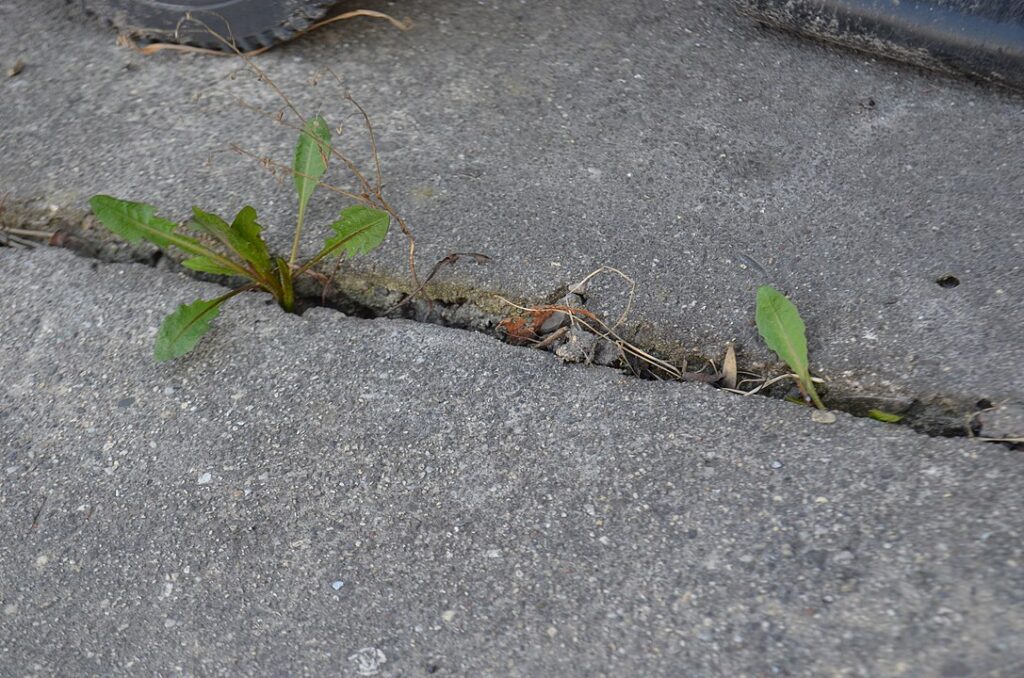
Onkruid tussen de sten

Weeds on paths and pavements can also be controlled with hot water. That pouring with hot water has to be repeated regularly and the weeds do not disappear completely, but it remains under control. The best time to water is late afternoon when the plants have the least water. The hot water heats up the above-ground plant parts, causes the plant to dry out and die if there is sufficient heat.